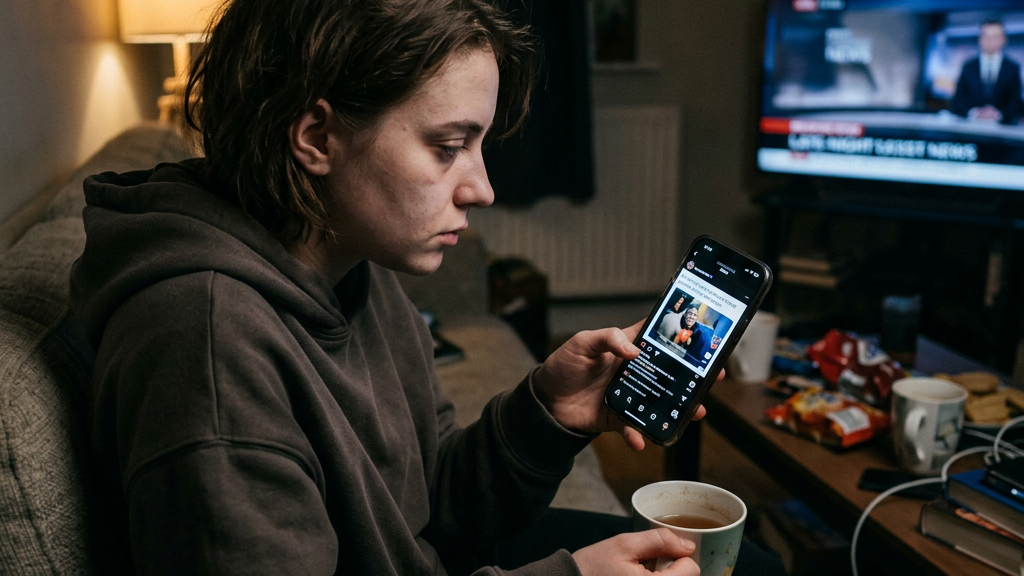
This blog explores how the information we see every day can influence our thoughts, decisions, and understanding of the world. Throughout this course, I’ll reflect on what I learn about media, credibility, and misinformation while becoming more intentional about the information I consume and share.
Scrolling for the Truth is my space for doing more than just scrolling, liking, and sharing whatever appears on my screen. Created for MCO 427: Misinformation and Society Fall 2026, this blog follows my experiences throughout the course as I take a closer look at the media I encounter in my everyday life. Social media is a huge part of how we communicate, stay entertained, and learn about what is happening around us in modern day society. From viral TikToks and trending headlines to AI-generated content and questionable claims, we are constantly being exposed to new information. The difficult part is figuring out what is actually true, what may be misleading, and what needs a little more research. Throughout this course, I want to become better at looking beyond the surface, checking sources, and questioning information before automatically believing or sharing it.
One of my biggest goals is to practice using social media in a more effective way instead of just constantly consuming content. It is easy to open an app for a few minutes and suddenly realize you have been scrolling much longer than you planned. I want to become more intentional about how I spend my time online and pay closer attention to the type of content I interact with. Instead of only consuming media, I want to use these platforms as tools for learning, creating, connecting with others, and finding information that is actually useful to me. I also want to understand how my likes, searches, comments, and shares can influence the content that continues to appear on my feed.
Throughout the course, I also want to pay more attention to where information comes from, who created it, and what their purpose might be. Something having thousands of likes or shares does not automatically make it credible. Misinformation can also appear in places we may not expect, including fitness advice, health information, motivational videos, advertisements, and everyday social media posts. This course is helping me realize that I need to slow down and think more critically about what I am seeing instead of assuming something is accurate because it sounds believable.
Technology and AI make this even more important because online content is becoming easier to create, edit, and manipulate. By the end of MCO 427, I hope to have a healthier and more intentional relationship with social media. I want to be more confident in recognizing misinformation, finding reliable sources, and making better decisions about what I consume and share. Most importantly, I want to move away from simply scrolling through information and become someone who actively questions, researches, creates, and uses media with a purpose. It can be surprisingly easy to be guided or persuaded into believing something that is not completely true. Sometimes information is based on someone’s opinion but is presented as a fact, while other times it may involve clickbait headlines, edited videos, misleading statistics, rumors, advertisements, or information taken out of context. When we repeatedly see the same claim on our feeds or see that thousands of people have liked and shared it, we may be more likely to believe it without checking where it originally came from. This is why I want to become more aware of how information is presented to me and learn to separate someone’s personal perspective from information supported by credible evidence.
Misinformation can also have psychological and socioeconomic effects that go beyond what happens on our screens. Psychologically, constantly being exposed to misleading or negative information can influence our emotions, fears, opinions, and decisions. Socioeconomic effects can happen when misinformation influences decisions involving money, education, employment, health products, or other resources. For example, someone might spend money on a product because of an exaggerated social media claim or make a financial decision based on misleading information. Learning to recognize these influences is important because the information we consume online can eventually affect the choices we make in real life.
Social media can be filled with so much negativity that it becomes easy to forget the positive purpose these platforms can serve. Between constant arguments, misleading information, unrealistic expectations, negative comments, and viral rumors, the content we consume can influence our mindset without us even realizing it. Throughout this course, I want to become more aware of what I give my attention to and learn how to use social media in a way that is positive, productive, and informative. Instead of allowing everything on my feed to influence how I think or feel, I want to be more intentional about what I consume, question information that seems misleading, and remember that not everything online deserves my attention or belief.
“In a world where information is constantly at our fingertips, it is important to slow down and think about what we are consuming. Keep an open mind, question what does not seem right, and remember that finding the truth sometimes requires looking beyond the first thing we see.”
– נσυяηєу