Breaking Harmony Square
For this assignment, I played Breaking Harmony Square, an interactive game that teaches players how misinformation can be created and spread online. Instead of simply reading definitions about misinformation, the game puts you in a position where you see different techniques used to influence people and create division. As I played, I had to make different choices about what information to share and how to get reactions from the community. This made the experience more interesting because I was actually interacting with the concepts instead of just reading about them.
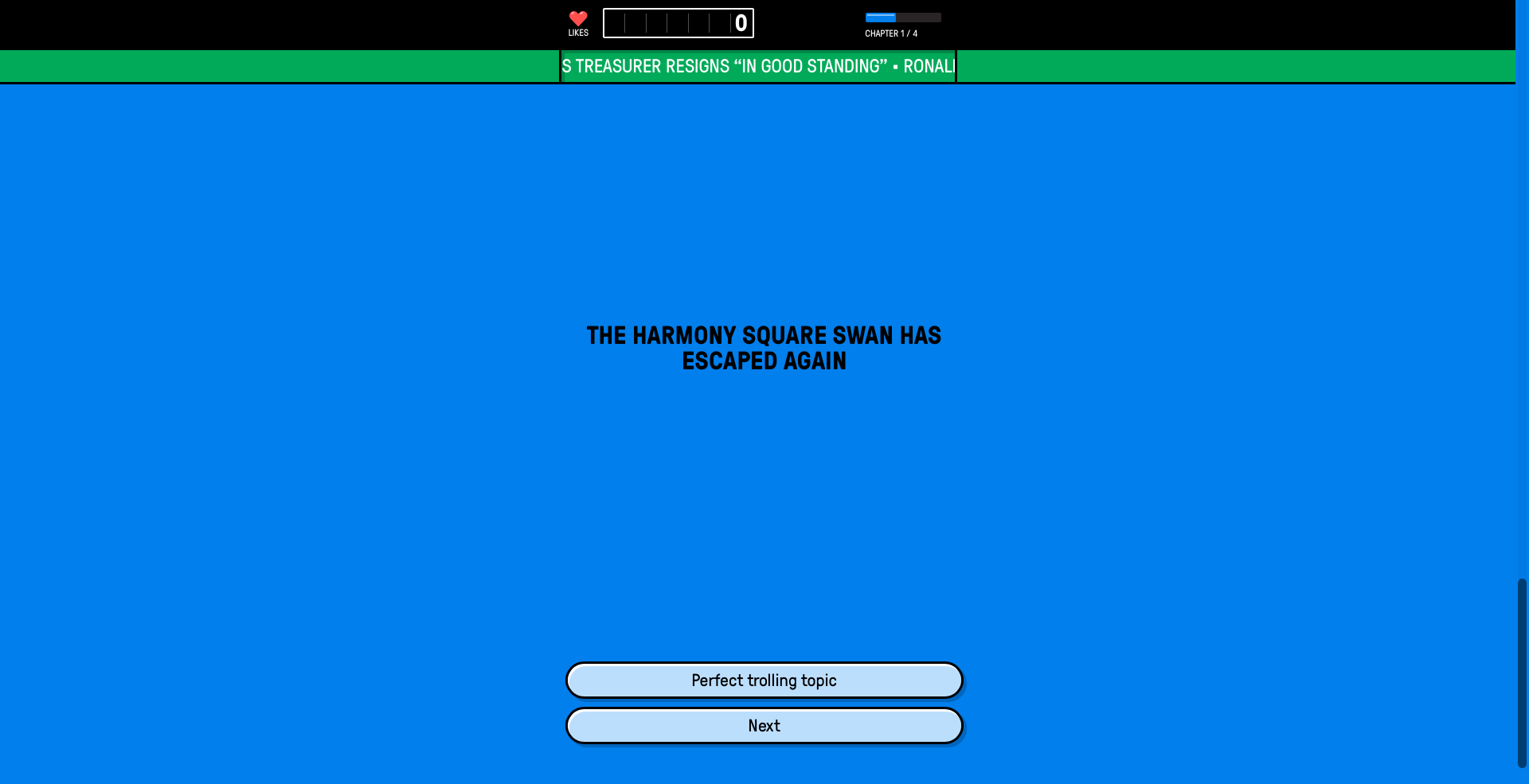
One thing I found effective about the game was how it demonstrated techniques such as using emotional language, creating conflict, trolling, and manipulating information to get people’s attention. It showed me how easily people online can react to information without stopping to determine whether it is accurate. I also think the game demonstrates why engagement is so important on social media. Content that makes people angry, afraid, or divided can sometimes receive more attention, which gives people an incentive to continue creating it.
Research supports using games to improve people’s ability to recognize misinformation. A study by Roozenbeek and van der Linden found that playing a misinformation game can help people recognize common misinformation techniques (Palgrave Communications). I think games like Breaking Harmony Square are useful because they allow us to experience misinformation strategies ourselves rather than only being told what to watch for.
RumorGuard
I also explored the News Literacy Project’s RumorGuard. RumorGuard is different from Breaking Harmony Square because it focuses on real-world claims and rumors circulating online. The website provides examples of questionable information and explains how someone can investigate whether a claim is credible. Instead of immediately believing or sharing something, users are encouraged to slow down, examine the evidence, and determine where the information originally came from.
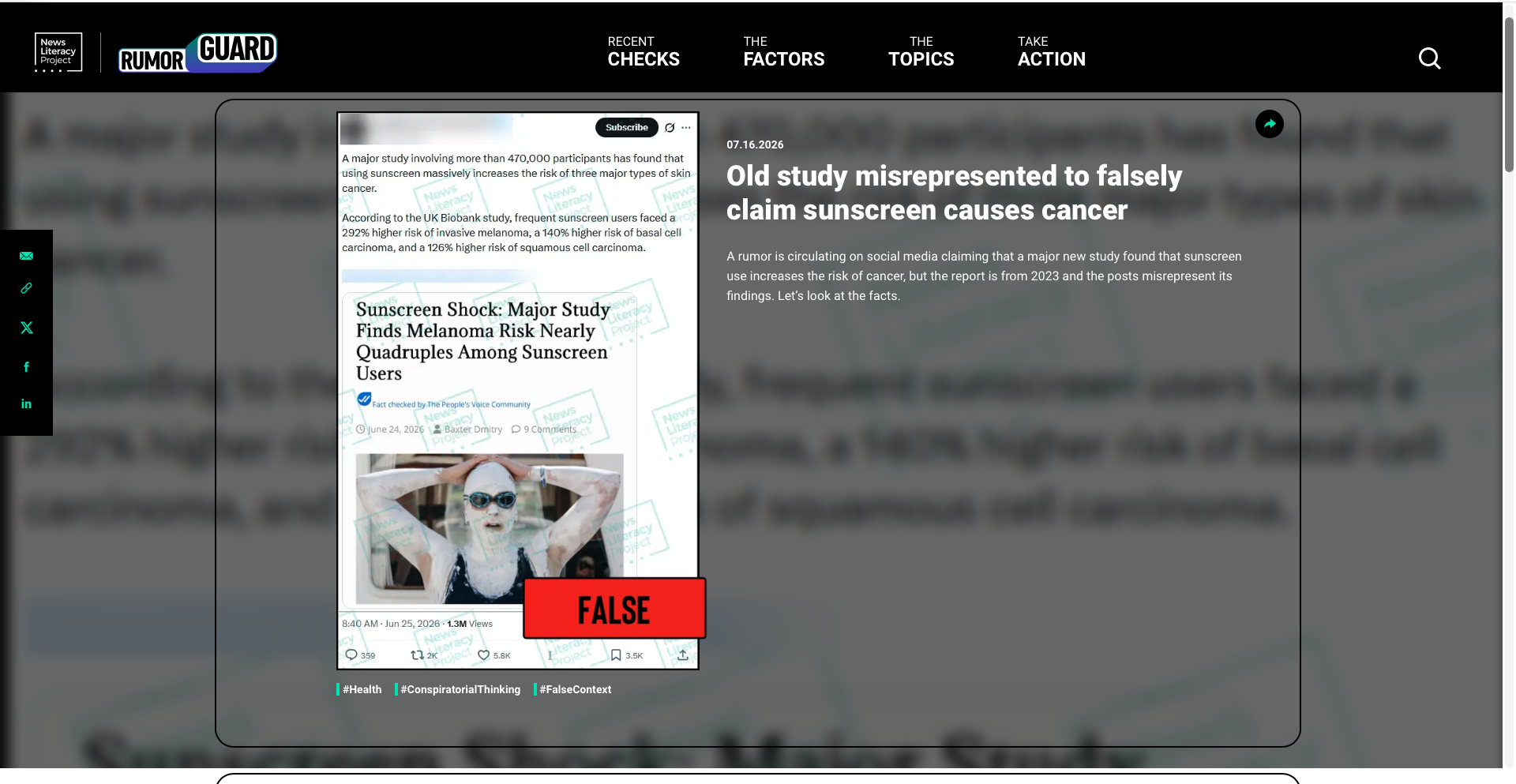
I explored the example titled “Old study misrepresented to falsely claim sunscreen causes cancer.” The rumor circulating on social media claimed that a major new study found that using sunscreen increases a person’s risk of cancer. What immediately caught my attention was that this type of claim could easily scare someone into changing their health habits without looking any further into the information. RumorGuard explained that the study being discussed was actually from 2023, rather than being a new study as the social media posts suggested. More importantly, the findings of the study were being misrepresented to support the claim that sunscreen causes cancer. What I liked most about RumorGuard was that it felt applicable to the social media content I see regularly. It teaches five important factors for evaluating information: authenticity, source, evidence, context, and reasoning. These factors provide a simple way to think critically before reposting something. For example, checking the original source or looking for additional evidence could prevent someone from spreading a misleading post simply because it looks believable.
I think RumorGuard is effective because it gives people practical skills they can use outside of the website. The News Literacy Project also provides additional educational resources designed to help people become more informed news consumers. As I explored RumorGuard, I liked how the information was broken down in a way that was easy to follow. Rather than expecting users to already know how to fact-check information, the tool walks you through the details of a claim and points out signs that should make you question it. This helped me understand that identifying misinformation does not always require being an expert on the topic. Sometimes it starts with simple actions such as checking the date, looking at the original source, comparing information with reliable sources, and questioning whether a post is leaving out important context.
Overall, I think interactive misinformation tools and games can be helpful because they make media literacy more engaging. Breaking Harmony Square showed me how misinformation can be created, while RumorGuard showed me how to investigate it once I encounter it. Neither tool can completely eliminate misinformation, but they can encourage people to question what they see, check sources, and think before sharing information online.
References
News Literacy Project. (n.d.). RumorGuard. https://www.rumorguard.org/
Roozenbeek, J., & van der Linden, S. (2019). Fake news game confers psychological resistance against online misinformation. Palgrave Communications, 5, 65. https://doi.org/10.1057/s41599-019-0279-9
Roozenbeek, J., & van der Linden, S. (2020). Breaking Harmony Square: A game that “inoculates” against political misinformation. Harvard Kennedy School Misinformation Review. https://misinforeview.hks.harvard.edu/article/breaking-harmony-square-a-game-that-inoculates-against-political-misinformation/
U.S. Department of State Global Engagement Center, DROG, & University of Cambridge. (n.d.). Harmony Square. https://harmonysquare.game/en

